
MYCOAIR — mycelium air filtration for the London Underground
MycoAir is an air filtration system for the London Underground made out of mycelium paneling. Air pollution in the London Underground is a health risk that affects 3.23 million users every day. Metallic particles enter the air through the rubbing of train wheels against the tracks. Particulate matter (PM2.5) in the air is small enough to enter the bloodstream and levels in the underground are 15 times higher than at street level. Studies have shown that exposure to these particles leads to increased risk of cornoary heart disease, asthma, lung cancer and stroke. Ventilation in the underground network is poor and HVAC systems are left idle. MycoAir is a paneling system made of mycelium. Mycelium is the root system of fungus. The dense, fibrous network of mycelium passively traps PM2.5 as it floats through the air. The panels' form is designed to channel air over the surface of the mycelium and provide a aesthetic effect similar to that of rolling dunes. MycoAir improves the air quality of the underground and the aesthetic experience of passengers as they commute. This design proposal was completed during the final year of my MArch in Bio-Integrated Design at the Bartlett School of Architecture.
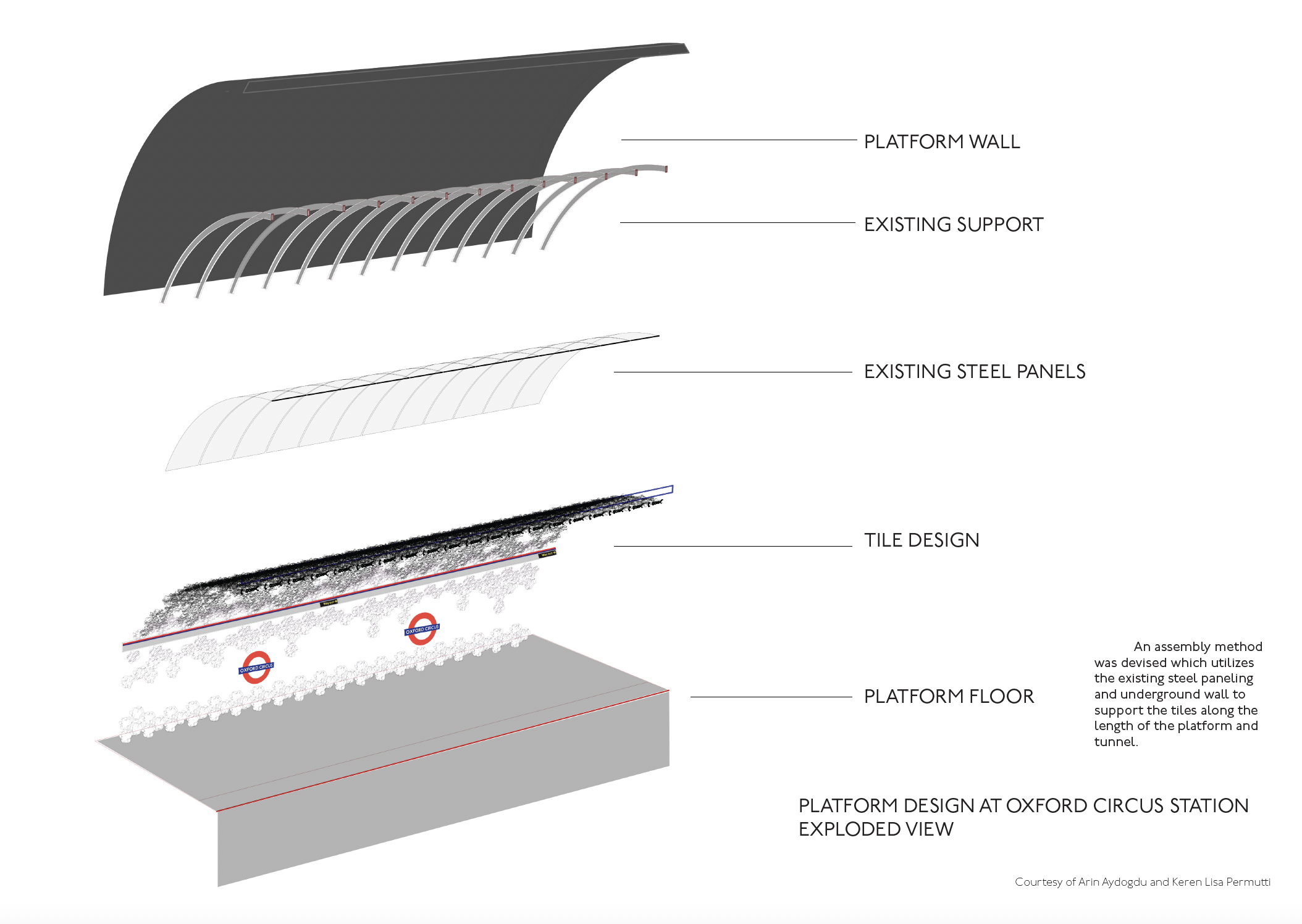
Construction diagram— technical drawing
The paneling system is designed to be installed onto existing wall paneling within the platform. The simple, lightweight design enables rapid installation by a small team of non-specialist workers.
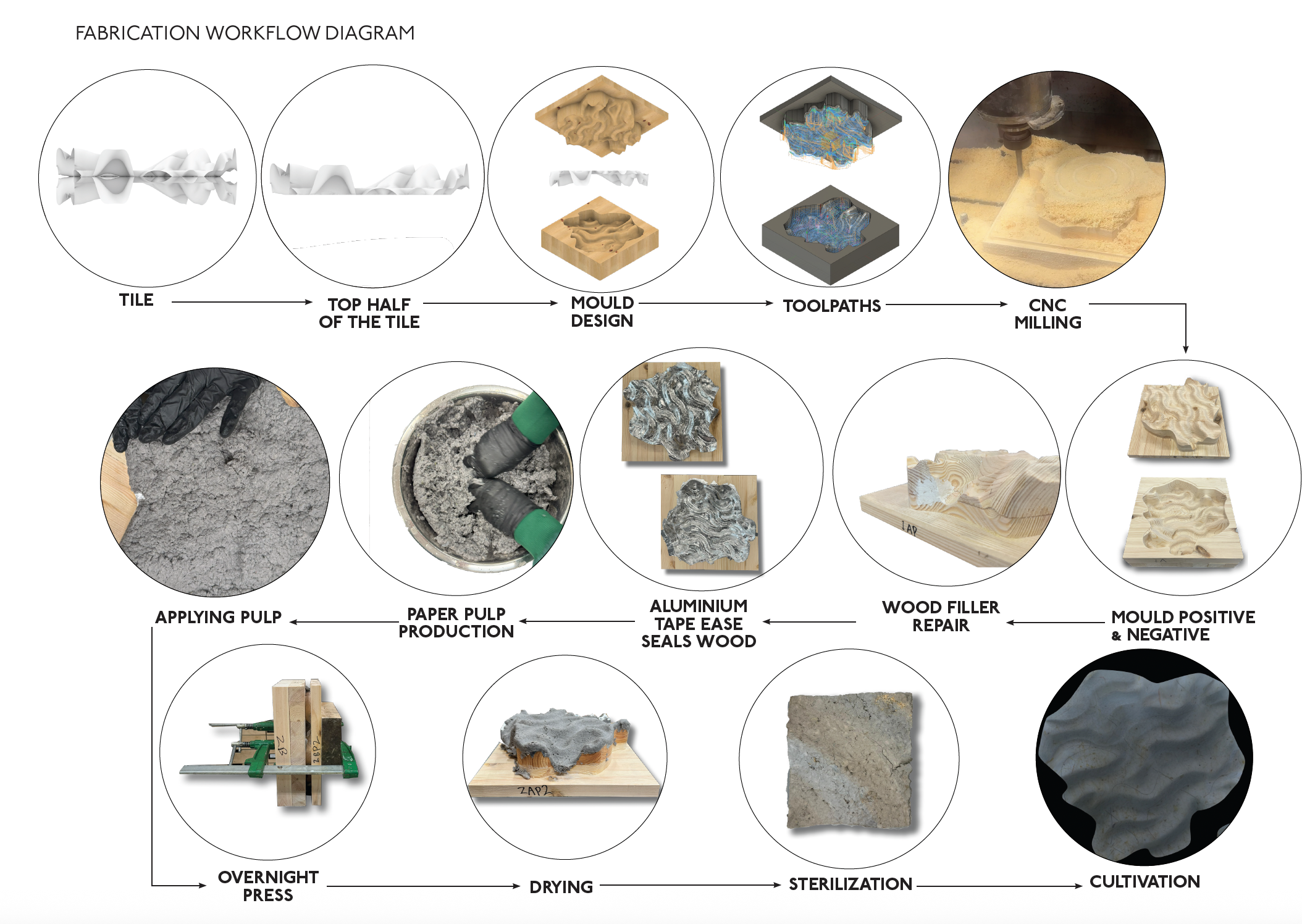
Fabrication workflow — diagram
Mycelium can be used as a design feature by growing it in a mold. A substrate (food source) must be used as the base on which the fungus grows. In our work we used a mixture of recycled newspapers sourced from the bins found on the platforms of the London Underground. This waste material is then processed and pressed into a mold. Using a similar technique to that used in the manufacturing of coffe cup holders, this newspaper pulp was pressed in a wooden mold. Advanced fabrication techniqes were used to produce the wooden molds for our substrate.